camera
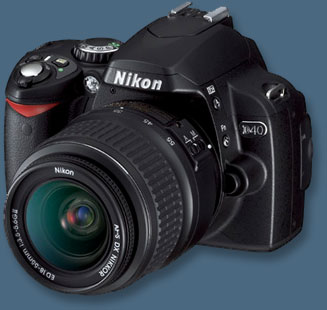
Nikon's D4 digital SLR camera.
A camera is a device for forming an optical image of a subject and recording it on a photographic film or plate or, as in digital cameras and television cameras, on a photoelectric mosaic. The design of modern cameras stems from the ancient camera obscura (see camera obscura and camera lucida), represented in recent times by the pinhole camera. This consists of a light-tight box with a small hole in one side and a ground-glass screen for the opposite wall. A faint image of the objects facing the hole is formed on the screen and this can be exposed on a photographic plate substituted for the screen.
Although the image produced in the pinhole-camera is distortion-free and perfectly focused for objects at any distance, the sensitive materials used when photography was born in the 1830s required such long exposure times that the earliest experimentalists turned to the already available technology of the lens as a means of allowing more light to strike the plate. From the start cameras were built with compound lenses to overcome the effects of chromatic aberration and the subsequent history of camera design has seen constant improvement in lens performance.
When a shutter is opened, usually briefly, light from the scene outside is focused by the lens system onto a film or charge-coupled device (CCD). The amount of light falling on the light-sensitive surface is controlled by the shutter speed and by the diameter of the lens aperture, which can also be varied using an adjustable iris diaphragm. Most cameras also have a rangefinder, enabling a focused image to be produced for a given object distance, and a built-in exposure meter to determine the correct combination of shutter speed and aperture for the prevailing light conditions. Both of these functions are automated in a camera with a computerized program (to set the correct combination of shutter speed and aperture) and an autofocus lens system.
Recently digital cameras have been developed in which a CCD records the photograph, which can then be downloaded onto a computer and a print made.