cardiac muscle
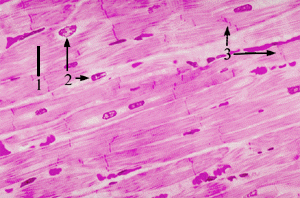
1. Cardiac muscle cell. 2. Nuclei. 3. Intercalated disks.
Cardiac muscles is a type of muscle found only in the walls of the heart, and specifically in the myocardium (the middle and thickest layer of the heart wall); it is under control of the autonomic nervous system.
Cardiac muscle is like skeletal muscle in that it is striated and multinucleate, and like smooth muscle in that the nuclei are centrally located and many cells are required to span the length of the muscle. It differs from both skeletal muscle and smooth muscle in that its cells branch and are joined to one another via intercalated disks. Intercalated disks allow communication between the cells such that there is a sequential contraction of the cells from the bottom of the ventricle to the top. This makes possible the maximal ejection of blood from the ventricle during contraction and occurs without nervous innervation to each cell or group of cells.
Cardiac muscle also differs from the other two muscle types in that contraction can occur even without an initial nervous input. The cells that produce the stimulation for contraction without nervous input are called the pacemaker cells.