hookworm
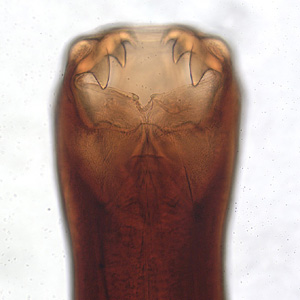
Anterior end of the adult hookworm Ancylostoma caninum, a dog parasite that has been found to produce a rare human infection known as eosinophilic enteritis.
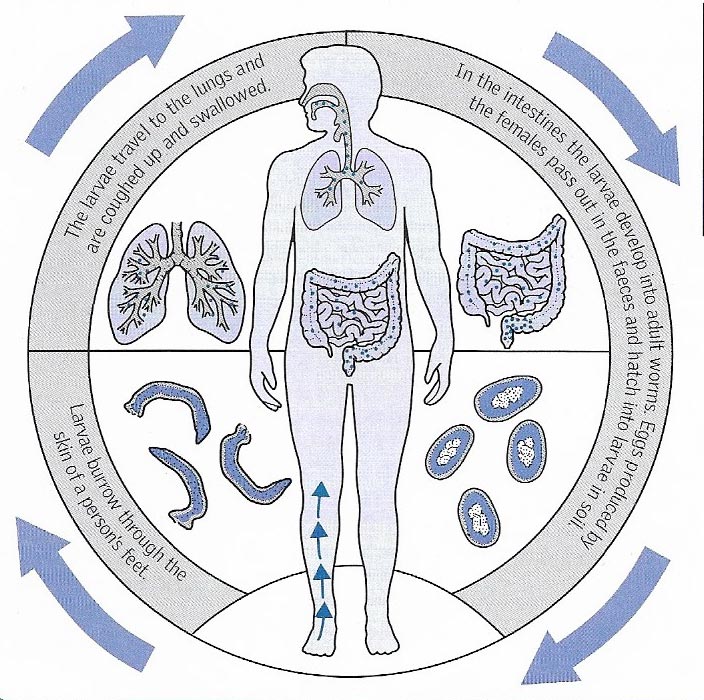
Infestation begins with larvae that penetrate the skin or are ingested and enter the bloodstream. They migrate throughout the body, particularly to the small intestine. Adult worms develop and lay eggs, which leave the body in feces and eventually hatch into larvae.
In humans, hookworm is either of two nematode worms, Necator americanus or Anclyostoma duodenale, which live as parasites in the intestine. Both species, also known as the New and Old World hookworms respectively, are of great medical importance (see below). Other species of hookworm are parasitic on other animals, including domestic pets.
Hookworm disease
A condition resulting from an infestation of the small intestine by hookworms. Hookworm eggs are passed in human feces onto the ground where they develop into infective larvae (immature worms). When the soil is cool, the larvae crawl to the nearest moist area and extend their bodies into the air. The larvae stay in the soil – waving their bodies to and fro – until they come into contact with human skin, usually when stepped on by a bare foot, or until they are driven back into the ground by the heat. Once they have penetrated the skin, the worms travel to the lungs in the bloodstream and from there pass via the windpipe and gullet to the small intestine.
Heavy hookworm infestations may cause considerable damage to the wall of the intestine, leading to a serious loss of blood; this, in conjunction with malnutrition, an provoke severe anemia. The disease occurs throughout the tropics and subtropics and is prevalent in areas of poor personal hygiene and sanitation. Mebendazole is used in treatment.
Symptoms
Diarrhea sometimes starts as the worms mature in your intestines and before eggs appear in the stool, particularly if you have never been infected by hookworms. During this stage of the disease you may have other symptoms, such as barely noticeable abdominal pain, intestinal cramps, colic, and nausea.
Scientists have learned that people in good health and on a diet containing adequate amounts of iron can tolerate the presence of these worms in small or moderate numbers without any symptoms.
In chronic (lasting a long time) hookworm infections, if the number of parasites becomes great enough, you can develop serious anemia (low red blood cell count). This is due to blood loss from the worms attaching themselves to the intestines and sucking the blood and tissue juices. When this situation is combined with poor nutrition, pregnancy, or malaria, the anemia can be severe.
Treatment
If the number of hookworm eggs in your intestines is large enough – more than 2,000 eggs per gram of stool – your healthcare provider will assume that the infection may cause anemia and start treating you.
Once you have been diagnosed with hookworm disease, your healthcare provider may prescribe medicine, such as mebendazole or albendazole. You might also be given an iron supplement with this treatment.
Prevention
If you are in an area where hookworm disease is common, or where human feces may be in the soil or sand, you