hypotension (low blood pressure)
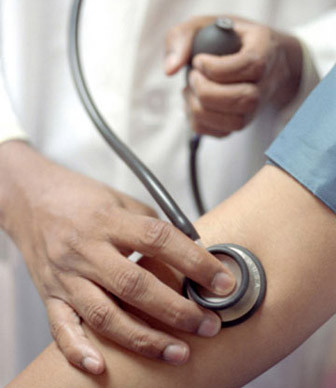
Hypotension is abnormally low blood pressure. Normal blood pressure is a reading of less than 120/80 mmHg (mmHg = millimeters of mercury, a unit for measuring pressure). Hypotension is blood pressure that is lower than 90/60 mmHg. Compare with high blood pressure (hypertension).
Some people have low blood pressure all the time. They have no signs or symptoms and their low readings are normal for them. In other people, blood pressure drops below normal because of some event or medical condition. Hypotension is a medical concern only if it causes signs and/or symptoms such as dizziness, fainting, or, in extreme cases, shock.
The body is very sensitive to changes in blood pressure. Special cells in the arteries, called baroreceptors, can sense if blood pressure begins to rise or drop. When the baroreceptors sense a rise or drop in blood pressure, they cause certain responses to occur throughout the body in an attempt to bring the blood pressure back to normal.
For example, if you stand up quickly, the baroreceptors will sense a drop in your blood pressure. They quickly take action to make sure that blood continues to flow to the brain, kidneys, and other important organs. The baroreceptors cause the heart to beat faster and harder. They also cause the small arteries (arterioles) and veins (the vessels that carry blood back to the heart) to narrow.
Most forms of hypotension happen when the body can't bring blood pressure back to normal or can't do it fast enough.
Outlook
In a healthy person, hypotension without signs or symptoms is usually not a problem and requires no treatment. Doctors will want to identify and treat any underlying condition that is causing the hypotension, if one can be found. Hypotension can be dangerous if a person falls because of dizziness or fainting.
Shock, a severe form of hypotension, is a life-threatening condition that is often fatal if not treated immediately. Shock can be successfully treated if the cause can be found and the right treatment provided in time.
Types of hypotension
There are several types of hypotension. One type, chronic asymptomatic hypotension, happens in people who always have low blood pressure. They have no symptoms and need no treatment. Their low blood pressure is normal for them.
Other types of hypotension happen only sometimes, when blood pressure suddenly drops too low. The symptoms and effects on the body can be mild or severe. The three main types of this kind of hypotension are orthostatic hypotension, neurally mediated hypotension (NMH), and severe hypotension associated with shock.
Orthostatic hypotension
Orthostatic hypotension is low blood pressure that occurs upon standing up from a sitting or lying down position. It can cause a person to feel dizzy, light-headed or even to faint. It occurs when the body is not able to adjust blood pressure and blood flow fast enough for the change in position. Usually orthostatic hypotension lasts for only a few seconds or minutes after a person stands up. Sometimes a person will need to sit or lie down for a short time while the blood pressure returns to normal.
Orthostatic hypotension can occur in all age groups, but it is more common in older adults, especially those who are frail or in poor health. Orthostatic hypotension can be a symptom of other medical conditions, and treatment generally focuses on treating the underlying condition(s). Some people can have orthostatic hypotension but also have high blood pressure when lying down.
A form of orthostatic hypotension called postprandial hypotension is a sudden drop in blood pressure after a meal. Postprandial hypotension most commonly affects older adults. It also is more likely to affect those with high blood pressure or diseases such as Parkinson's disease.
Neurally mediated hypotension
In this form of hypotension, blood pressure drops after a person has been standing for a long time. A person may feel dizzy, faint, or sick to the stomach as a result. NMH also can happen when a person faces an unpleasant, upsetting, or frightening situation.
NMH affects children and young adults more often than other age groups. Children often outgrow this form of hypotension.
Severe hypotension associated with shock
Many times people will say a person has "gone into shock" as a result of an emotionally upsetting experience. But to doctors, the word "shock" has a different meaning. Shock is a life-threatening condition in which blood pressure drops so low that the brain, kidneys, and other vital organs can't get enough blood to work properly. It is different from the other forms of hypotension because blood pressure drops much lower, and it is life threatening if not treated immediately. There are many causes of shock, including major loss of blood, certain severe types of infection, severe burns, severe allergic reactions, and poisoning.
Causes
Hypotension is caused by conditions or events that interfere with the body's ability to control blood pressure.
Orthostatic hypotension
Orthostatic hypotension has many causes. Sometimes, two or more causes combined will result in hypotension.
Dehydration is the most common cause of orthostatic hypotension. Dehydration occurs when the body loses more water than it takes in. People can become dehydrated because of:
Some medicines used to treat high blood pressure and heart disease can make it more likely that a person will develop orthostatic hypotension. These medicines include:
Also, medicines used to treat certain other medical conditions, such as anxiety, depression, erectile dysfunction, and Parkinson disease, can make it more likely that a person will develop orthostatic hypotension.
Other substances that can contribute to orthostatic hypotension include alcohol, barbiturates, and some prescription and over-the-counter medicines, when taken in combination with high blood pressure medicines.
Certain medical conditions can increase a person's chances of having orthostatic hypotension. Some of these conditions are:
Finally, other events or conditions that can contribute to orthostatic hypotension include:
Neurally mediated hypotension
Neurally mediated hypotension (NMH) occurs when the brain and heart don't communicate with each other properly. For example, when a person stands for a long time, blood begins to pool in the legs. This causes the person's blood pressure to drop. Instead of telling the brain that blood pressure is low, the body mistakenly tells the brain that blood pressure is high. In response, the brain slows the person's heart rate, which makes the blood pressure drop even further, causing dizziness and other symptoms.
Severe hypotension associated with shock
Severe hypotension associated with shock can be caused by many conditions or events. Some of these conditions and events also are causes of orthostatic hypotension. The difference in shock is that the blood pressure doesn't return to normal by itself, and it is at dangerously low levels. Shock is a medical emergency that must be treated immediately.
Certain severe infections can cause a type of shock known as septic shock (see sepsis). This type of shock can occur when bacteria enter the bloodstream. The bacteria release a toxin (a poison) that leads to a dangerous drop in blood pressure.
Shock can be caused by a severe decrease in the amount of blood or fluids in the body. This is known as hypovolemic shock. Hypovolemic shock can happen as a result of:
A major decrease in the heart's ability to pump blood can cause shock. This is known as cardiogenic shock. It can be caused by a heart attack, pulmonary embolism, or arrhythmia.
A sudden and extreme relaxation of the muscles of arteries, which leads to dilation (widening) of the arteries and a drop in blood pressure, can cause shock. This is known as vasodilatory shock. It can happen because of:
Who is at risk?
People of all ages can have hypotension, though people of certain ages are more likely to have certain kinds:
People with Parkinson disease and some heart conditions also have a higher risk of hypotension.
Signs and symptoms
orthostatic hypotension
The symptoms of orthostatic hypotension happen within a few seconds or minutes of a person standing up after sitting or lying down. They go away if the person sits or lies down again. The signs and symptoms include:
Neurally mediated hypotension
The symptoms of neurally mediated hypotension (NMH) happen after a person has been standing for a long time or in response to an unpleasant, upsetting, or frightening situation. Like orthostatic hypotension, the drop in blood pressure with NMH is temporary and usually goes away after the person sits down. The signs and symptoms of NMH are similar to those of orthostatic hypotension.
Severe hypotension associated with shock
In shock, not enough blood flows to the major organs, including the brain.
The early signs and symptoms of reduced blood flow to the brain include lightheadedness, sleepiness, and confusion. In the earliest stages of shock, it may be hard to detect any signs and symptoms. In older people, the first symptom may only be confusion.
As shock worsens, eventually, the person cannot sit up without passing out. If it continues, the person will lose consciousness. Shock is often fatal if not treated.
Some of the other signs and symptoms of shock vary, depending on the cause. When shock is caused by low blood volume (such as from massive bleeding) or poor pumping action by the heart (as in heart failure):
When shock is caused by extreme widening or stretching of blood vessels (such as in septic shock), a person feels warm and flushed at first. Later, the skin becomes cold and clammy, and the person feels very sleepy.
Diagnosis
Hypotension is diagnosed using a medical history and physical exam to find out:
Specialists involved
Depending on the type of hypotension, it might be diagnosed and treated by a primary care doctor, or specialists may be involved, especially for the treatment of shock. The type of specialist most commonly involved is a cardiologist. A cardiologist is a doctor who diagnoses and treats heart diseases. Other specialists, including surgeons, nephrologists (kidney specialists), neurologists (brain and nerve specialists), and others may be involved.
Diagnostic tests and procedures
If a person is in shock, emergency action is required to find the cause and treat the shock. For other types of hypotension, the doctor may order the following tests:
Portable EKG monitoring. Wires are attached to your chest with sticky patches and connected to a small battery-operated recorder.
A Holter monitor records all the heart's electrical activity for 24 hours.
An event monitor records selected periods of the heart's electrical activity. You may use this monitor for 1-2 months. When you feel symptoms, you press a button and the device records the heart's electrical activity. The information can be sent over the telephone to the doctor.
There are several different types of echocardiograms, including a stress echocardiogram. During this test, an echocardiogram is done both before and after your heart is stressed either by having you exercise or by injecting a medicine into your bloodstream that makes your heart beat faster and work harder. A stress echocardiogram is usually done to find out if you have decreased blood flow to your heart (coronary artery disease).
During exercise stress testing, your blood pressure and EKG readings are monitored while you walk or run on a treadmill or pedal a bicycle. Other heart tests, such as nuclear heart scanning or echocardiography, also can be done at the same time. These would be ordered if your doctor needs more information than the exercise stress test can provide about how well your heart is working.
If you are unable to exercise, a medicine can be injected through an intravenous line (IV) into your bloodstream to make your heart work harder and beat faster, as if you are exercising on a treadmill or bicycle. Nuclear heart scanning or echocardiography is then usually done.
During nuclear heart scanning, radioactive tracer is injected into your bloodstream, and a special camera shows the flow of blood through your heart and arteries. Echocardiography uses sound waves to show blood flow through the chambers and valves of your heart and to show the strength of your heart muscle.
Your doctor also may order two newer tests along with stress testing if more information is needed about how well your heart works. These new tests are magnetic resonance imaging (MRI) and positron emission tomography (PET) scanning of the heart. MRI shows detailed images of the structures and beating of your heart, which may help your doctor better assess if parts of your heart are weak or damaged. PET scanning shows the level of chemical activity in different areas of your heart. This can help your doctor determine if enough blood is flowing to the areas of your heart. A PET scan can show decreased blood flow caused by disease or damaged muscles that may not be detected by other scanning methods.
Treatment
Treatment depends on the cause of the hypotension and how severe the signs and symptoms are.
Hypotension in a healthy person that does not cause signs or symptoms usually does not need to be treated. Hypotension that causes signs or symptoms often needs to be treated. Severe hypotension associated with shock is a medical emergency. It can cause death if it is not treated immediately.
A person's response to treatment depends on his or her age and overall health and strength. It also depends on how easily the person can stop, start, or change medicines.
Any person with blood pressure low enough to cause symptoms should immediately sit or lie down, with the feet up above the level of the heart. Low blood pressure symptoms that do not go away very quickly upon sitting or lying down can be a medical emergency, and immediate medical attention is needed.
Treating orthostatic hypotension
The goals of treatment are to relieve or improve signs and symptoms and to manage any underlying medical condition causing the hypotension.
Treatment can include:
Drinking little or no alcohol
Standing up slowly
Gradually sitting up for longer periods of time if you've had to stay in bed for a long time
Treating neurally mediated hypotension
Treatment for neurally mediated hypotension (NMH) can include:
Drinking plenty of fluids, like water.
Increasing salt intake.
Learning to recognize symptoms that occur before fainting, and taking action to raise blood pressure (crossing the legs and squeezing them together or lying down).
Children with NHM often outgrow it.
Treating severe hypotension associated with shock
Shock is a life-threatening emergency that usually requires treatment in a hospital or by emergency medical personnel. The goals of treating shock are to restore blood flow to the organs as quickly as possible, to prevent organ damage, and to find and reverse the cause of the shock.
Restoring blood flow to the organs often requires that special fluids or blood be given directly into the bloodstream through a needle. Medicines can be given to raise the blood pressure or make the heartbeat stronger. Depending on the cause of the shock, other treatments such as antibiotics or surgery may be required.
Living with hypotension
Hypotension can often be successfully treated, and many people with hypotension live normal, healthy lives.
If you have hypotension, it's important to try and prevent or minimize symptoms, such as dizzy spells and fainting. Steps to take may include the following: