
non-catalytic wood stove
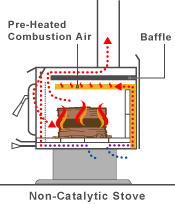
A non-catalytic wood stove is a wood-burning stove that, unlike a catalytic wood stove, doesn't use a catalyst, but has three internal characteristics that create a good environment for complete combustion. These are firebox insulation, a large baffle to produce a longer, hotter gas flow path, and pre-heated combustion air introduced through small holes above the fuel in the firebox. Like catalytic wood stoves, modern non-catalytic stoves were first introduced in the later 1980s to comply with a 1988 EPA regulation. This regulation set mandatory smoke emission limits for wood stoves of 4.1 grams of smoke per hour for catalytic stoves and 7.5 grams per hour for non-cats.
 |
While non-cats can't match the even heat output of catalytic stoves, their owners can enjoy watching the beautiful fire they create. The baffle and some other internal parts of a non-catalytic stove will need replacement from time to time as they deteriorate with the high heat of efficient combustion.