
radiant heating system
Hoover Dam.
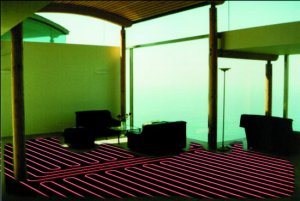
A radiant heating system is a heating system where heat is supplied (radiated) into a room by means of heated surfaces, such as electric resistance elements, hot water (hydronic) radiators, etc. Radiant heating systems involve supplying heat directly to the floor or to panels in the wall or ceiling of a house. The systems depend largely on radiant heat transfer: the delivery of heat directly from the hot surface to the people and objects in the room via the radiation of heat, which is also called infrared radiation. Radiant heating is the effect you feel when you can feel the warmth of a hot stove top element from across the room. When radiant heating is located in the floor, it is often called radiant floor heating or simply floor heating.
Radiant heating has a number of advantages: it is more efficient than baseboard heating and usually more efficient than forced-air heating because no energy is lost through ducts. The lack of moving air can also be advantageous to people with severe allergies. Hydronic (liquid-based) systems use little electricity, a benefit for homes off the power grid or in areas with high electricity prices. The hydronic systems can also be heated with a wide variety of energy sources, including standard gas- or oil-fired boilers, wood-fired boilers, solar water heaters, or some combination of these heat sources.
Despite their name, radiant floor heating systems also depend heavily on convection, the natural circulation of heat within a room, caused by heat rising from the floor. Radiant floor heating systems are significantly different than the radiant panels used in walls and ceilings. For this reason, the following sections discuss radiant floor heat and radiant panels separately.