stomach
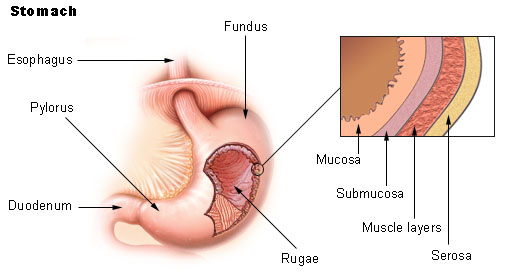
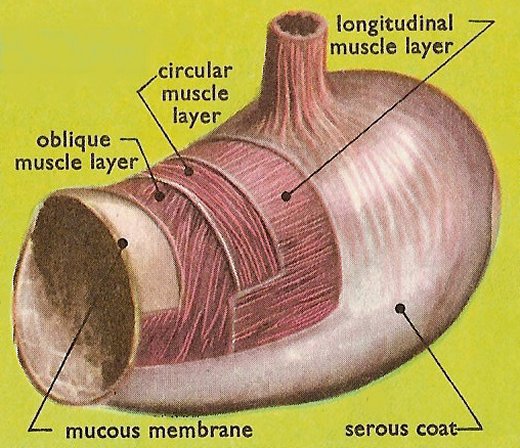
The stomach is the sac-like portion of the gastrointestinal tract system that follows, and receives food from, the esophagus.
The stomach, which is located in the upper left quadrant of the abdomen, is divided into the fundic, cardiac, body, and pyloric regions. The lesser and greater curvatures are on the right and left sides, respectively, of the stomach. The inner surface is highly convoluted, enabling the stomach to fold up when empty and expand like a balloon as it fills with food.
Functions of the stomach
intrinsic factor
pepsinogen
mucus
Gastric secretions
The mucosal lining of the stomach is simple columnar epithelium with numerous tubular gastric glands. The gastric glands open to the surface
of the mucosa through tiny holes called gastric pits. Four different types
of cells make up the gastric glands:
The secretions of the exocrine gastric glands – composed of the mucous,
parietal, and chief cells – make up the gastric
juice. The products of the endocrine cells are secreted directly into
the bloodstream and are not a part of the gastric juice. The endocrine cells
secrete the hormone gastrin, which functions in the regulation of gastric
activity.
Regulation of gastric secretions
The regulation of gastric secretion is accomplished through neural and hormonal mechanisms. Gastric juice is produced all the time but the amount varies subject to the regulatory factors. Regulation of gastric secretions may be divided into cephalic, gastric, and intestinal phases. Thoughts and smells of food start the cephalic phase of gastric secretion; the presence of food in the stomach initiates the gastric phase; and the presence of acidic chyme in the small intestine begins the intestinal phase.
Stomach emptying
Relaxation of the pyloric sphincter allows chyme to pass from the stomach into the small intestine. The rate of which this occurs depends on the nature of the chyme and the receptivity of the small intestine.